April 15, 2026
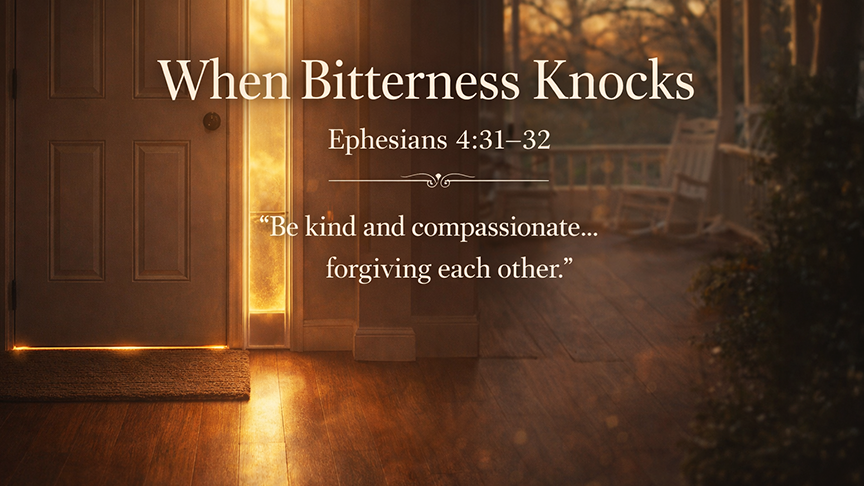
In Ephesians 4:31–32, Paul calls believers to put away bitterness, rage, anger, harsh words, and malice. Instead, Christians are to be kind and compassionate, forgiving one another as God in Christ forgave them. The passage treats bitterness as something that can take root and shape a life, but it also offers a clear path back to Christlike freedom through forgiveness and grace.
Devotional: Bitterness rarely shows up all at once.
It usually starts small. A comment that stung. A betrayal you did not expect. A situation that was unfair. A disappointment that never got resolved. A moment when you needed someone to show up and they did not. You try to brush it off and keep going, but the hurt stays close. Then, before you know it, the hurt has grown teeth.
That is why scripture treats bitterness like something dangerous, not because your pain is imaginary, but because bitterness turns pain into a home. It moves in. It rearranges the furniture. It starts narrating everything. It does not just say, “That was wrong.” It begins to say, “This is who they are, and this is who I have to be now.”
Paul names bitterness alongside rage, anger, and malice because they often travel together. When bitterness takes root, it does not stay quiet. It leaks out in our tone. It shows up in sarcasm, coldness, impatience, and the way we talk about people when they are not in the room. It hardens compassion. It trains us to expect the worst. It makes us feel justified, but it leaves us smaller.
And here is the hard truth. Bitterness feels like protection. It feels like control. It feels like a way to make sure we do not get hurt again. But it does not actually protect us. It poisons us. It keeps our hearts locked in the moment of injury. It keeps the wound open, then calls that openness “strength.”
Paul does not tell us to ignore what happened. He tells us to deal with it in a way that does not destroy our souls. He says, “Be kind and compassionate to one another, forgiving each other, just as in Christ God forgave you.” That is not cheap forgiveness. That is gospel forgiveness. It does not pretend sin is small. It says sin is real, but grace is stronger.
Forgiveness does not always mean reconciliation. Sometimes reconciliation is not safe or wise. Forgiveness does not always mean trust is restored. Trust can take time, and sometimes it should. Forgiveness means you refuse to keep drinking the poison. You hand the person, the situation, and the pain over to God’s justice and God’s mercy. You stop letting the wound drive the car.
That kind of forgiveness is not willpower. It is worship. It is an act of faith that says, “Lord, You have forgiven me more than I can measure, so help me not live chained to what was done to me.” Forgiveness is not forgetting. It is releasing. It is loosening your grip on vengeance so you can take hold of Christ again.
Bitterness knocks on every Christian’s door sooner or later. The question is not whether you will be tempted, the question is whether you will let it move in. And if it has already moved in, the good news is that Jesus can still lead it out. He can heal what has been hurt. He can soften what has been hardened. He can restore your ability to love without losing wisdom. He can make you free.
Action: Ask God to show you one place where bitterness may be taking root. Pray specifically for grace to forgive, and take one small step toward release, even if it is simply naming the hurt honestly to the Lord.
Prayer: Lord Jesus, You know the places where I have been hurt, disappointed, or treated unfairly. You see the wounds I carry and the ways bitterness tries to settle into my heart. Forgive me for the times I have held on to anger as if it could protect me. I do not want to be ruled by resentment. I do not want my pain to shape me more than Your grace. Help me forgive as You have forgiven me. Give me wisdom where boundaries are needed, and give me mercy where my heart has grown hard. Heal what is still tender in me, and make me free. In Jesus’ name I pray. Amen.
Thought for the Day: Bitterness chains the heart, forgiveness opens the door to freedom.
When Bitterness Knocks is for the moments when hurt starts turning into something heavier, something that follows you around and colors everything. Ephesians 4:31–32 doesn’t pretend pain isn’t real, but it warns us about what bitterness can do if we let it settle in. It hardens the heart, steals peace, and keeps us tied to the wound. Jesus offers a better way, kindness, compassion, and forgiveness, not because what happened was okay, but because you deserve to be free. Forgiveness isn’t always reconciliation, and it isn’t ignoring the truth. It’s releasing what’s poisoning you and trusting God to handle what you cannot.
No sermon this week, I'm on vacation